About Piston Twin Aircraft
Although twin-engine piston aircraft, also known as “twin pistons,” “piston twin aircraft,” and “multi-twins,” are typically more expensive to purchase and maintain than single-engine piston aircraft, having a second engine pays big dividends in the form of increased safety and performance.
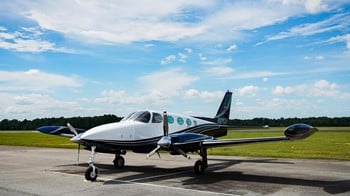
1980 Cessna 340A
In addition, many new and used twin-engine piston aircraft from Beechcraft, Cessna, Diamond Aircraft, and other brands can take off from and land at shorter runways than larger turboprops or jets. This, in turn, means these planes give you access to a much longer list of airports and airfields, making them a good fit for a greater variety of mission types.
Twin-Piston Aircraft Common Uses
Piston twin aircraft like the 6-seat Diamond DA62, sometimes called a “flying luxury SUV,” are well-suited to private and recreational travel. The Tecnam P2012, meanwhile, can be configured for passenger transport, hauling cargo, or a combination of the two, as well as medevac and skydiving missions. The following mission types are commonly served by twin-engine piston aircraft:
- Flight training - The Piper Seminole, Beechcraft Baron G58, and other piston twin planes are popular for helping pilots around the globe get their multi-engine rating.
- Business travel - Although piston twins typically lack the range of turboprop and jet planes, many offer executive configurations with comfortable seating and amenities like USB ports, writing tables, and reading lights that appeal to business travelers. Good examples of such airplanes would be the Cessna 402 and the Tecnam P2012 Traveller.
- Cargo transport - Many twin pistons, such as the Cessna 421 Golden Eagle and the Piper Navajo, offer the flexibility of removable seats for transporting cargo.
- Charter flights - Charter companies of all sizes use twin-engine piston aircraft to provide cost-effective regional connectivity and to access smaller airports. For example, the 9-seat Tecnam P2012 offers the same amenities as an airliner, according to its manufacturer.
- Special missions - Piston-twin planes can support special missions such as terrain and geographical mapping, skydiving, aerial surveying and photography, law enforcement, and medical evacuation.
Advantages Of An Extra Engine
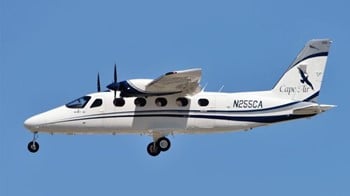
2019 Tecnam P2012 Traveller
A twin-engine plane’s extra engine provides critical redundancy: in the unlikely event that one engine fails, the aircraft can continue flying. This is a considerable benefit to pilots who often fly in tricky weather conditions and over large bodies of water, mountains, or other challenging terrain.
Furthermore, some twin pistons are designed so their flight systems and certain cabin features can power off one engine.
Compared to piston singles, twin-engine piston aircraft offer:
- Better takeoff and climb performance
- Faster operating and maximum cruise speeds
- Twin pistons generally have service ceilings ranging from 17,000 to 30,000 feet, vs. 12,000 to 18,000 ft for piston singles
- Greater flight range due to increased fuel capacity and efficiency at higher altitudes
Key Piston Single & Twin-Engine Piston Aircraft Differences
Piston twin and single-engine piston aircraft have numerous similarities. Many models provide a modern flight deck, such as Garmin’s glass touchscreen G1000 NXi, and technologies like autopilot, weather radar, and synthetic vision. They also have differences worth mentioning, such as the extra training required for twin-engine pilot certification. Other examples include:
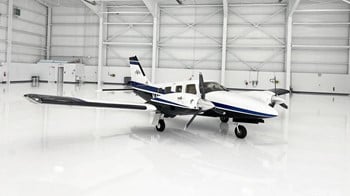
1999 Piper Seneca V
- Cost - In addition to higher upfront costs, twin pistons typically have higher ongoing maintenance, repair, overhaul, fuel, and insurance costs.
- Complexity - If your goal is to eventually advance to flying a turboprop or jet, twin-engine pistons can be a good stepping stone to your goal.
- Seating capacity - Twin-piston planes typically provide more spacious cabins and can haul more baggage and cargo. Although typical twin configurations accommodate up to six passengers, some models support nine or more.
Find Your Next Twin-Engine Piston Aircraft On Controller.com
Explore Controller.com to find new and used twin-engine piston aircraft for sale from industry-leading brands such as Aerostar, Beechcraft, Cessna, Commander, Diamond, Piper, Tecnam, Vulcanair/Partenavia, and others.
Once you find the plane that best fits your needs, check with CurrencyAir for help obtaining financing for your purchase. Another helpful tool from Sandhills Global, Aircraft Cost Calculator, is the aviation industry’s easiest, most powerful way to calculate real-world aviation operating expenses.

 Get Financing